When sexual desire subsides, there is no one cause and therefore no one solution. Increasing the libido in men begins with understanding the reason for the lower desire. Lack of sleep, stress, psychological stress, relationship problems, certain medications, medical conditions or a testosterone deficiency can affect sexual desire.
Age also plays a role, but this does not automatically mean that less sexual desire is pathological. Libido changes over the course of life and can be temporarily stronger or weaker. It becomes problematic especially if the change continues, burdened or occurs together with other complaints.
The current guidelines of the European Association of Urology cite androgen deficiency, depression, anxiety, relationship problems, certain medications, chronic diseases and erectile problems as possible factors for low sexual desire in men.
Who his Increase libido in men Therefore, should not only look for a fast means. More meaningful is a look at hormones, physical health, sleep, stress, medications and the personal life situation.

Libido means sexual desire or interest in sexual activity. Libido is not the same as an erection.
For example, a man may have sexual desire but may have difficulty building or maintaining an erection. Conversely, an erection can basically work while there is hardly any sexual interest.
This distinction is important.
With a low libido, the main focus is on the question:
"Do I have less desire for sex than before or than I would like?"
Erectile dysfunction, on the other hand, is more about the physical ability to achieve or maintain an adequate erection.
Of course, both problems can occur at the same time. An erectile dysfunction, for example, can lead to uncertainty and pressure to perform and thus additionally affect sexual desire.
Male libido is influenced by several factors. Hormones play a role, but they are only part of the overall picture.
Testosterone is important for male sexual function. Pronounced testosterone deficiency may be associated with decreased sexual desire.
However, lower libido does not automatically mean that the testosterone level is too low.
The EAU explicitly points out that sexual desire cannot simply be derived directly from a single testosterone level. In the assessment, complaints, medical history and laboratory values must be considered together.
Other hormonal or physical changes can also play a role. These include, for example, disturbances of the thyroid gland or an increased prolactin level.
Therefore, it makes little sense to immediately take testosterone preparations if the libido decreases.
Chronic stress can significantly affect sexual desire.
Those who are permanently under professional pressure, sleep poorly or are constantly busy with worries often have less room for sexual thoughts and excitement.
Also, depressive moods and anxiety may be associated with reduced sexual desire. The EAU explicitly cites depression, anxiety and other psychological factors as possible causes of low libido.
Sleep should not be underestimated.
A man who is exhausted for a long time may have less interest in sex, even if there is no hormonal disease.
Sexual pleasure does not arise exclusively in the body.
Relationship conflicts, lack of closeness, unresolved tensions or different sexual needs can affect libido.
This does not automatically have to be a "disturbance". Different sexual needs are normal in relationships.
It is more likely to be problematic if the discrepancy between the partners leads to considerable suffering.
The EAU therefore recommends that relationship factors and the individual situation be taken into account when assessing a low libido.
General health can also affect sexual desire.
Possible connections include:
A low libido can therefore sometimes be an indication that a health problem should be studied more closely.
This does not mean that all temporary listlessness is medically questionable. In the case of longer-lasting or newly occurring changes, however, a clarification is worthwhile.
Medications can also affect sexual desire.
These include, for example, certain antidepressants, some blood pressure medications, antipsychotics and medications that interfere with hormone balance.
Among other things, the EAU lists antidepressants, antipsychotics, certain blood pressure drugs and antiandrogens as possible factors in sexual dysfunction.
Excessive alcohol consumption and certain drugs can also affect sexual function.
If the libido is significantly changed after the start of a new drug, the preparation should not be discontinued independently. Instead, the attending physician should check whether there is a connection and whether an alternative is possible.
If there is no disease in need of treatment, lifestyle changes can be a meaningful basis.
This is not about a single "libido booster", but about several factors that together support physical and mental health.
Sleep affects energy, mood and physical performance.
Those who regularly sleep too little often feel exhausted and less resilient. This can also affect sexual interest.
A fixed sleep routine can therefore be useful.
For example, it is helpful to:
Sleep is not a medication for libido loss. However, it creates better conditions for physical and psychological well-being.
Exercise is an important part of a healthy lifestyle.
Regular endurance and strength training supports general fitness and can have a positive effect on the cardiovascular system, metabolism and body feeling.
Especially for men with a lack of movement, it can be useful to start small at first.
Even regular walks, cycling, swimming or moderate strength training can be a better starting point than an excessive training program that is abandoned after a short time.
Stress cannot always be completely avoided. However, the way it is dealt with can be changed.
Possible approaches are:
If there are severe psychological stresses or depressive symptoms, self-help may not be enough. Then professional support can be useful.
A balanced diet is not a special means of directly increasing libido.
However, it supports overall health and can help reduce risk factors such as overweight or metabolic problems.
It makes sense to have a varied diet with enough vegetables, fruits, whole grains, protein sources and healthy fats.
Caution is appropriate for so-called libido supplements.
Products that promise a rapid increase in testosterone, desire or sexual performance are not automatically effective or safe. Especially with products with unclear composition should be cautious.
High alcohol consumption can affect sexual function. Smoking, on the other hand, is an important risk factor for vascular health.
Anyone who wants to improve their sexual health should therefore also consider these factors.
The goal should not be to reach a certain "libido value" as quickly as possible. Rather, it is crucial to improve the health conditions for a functioning sex life.
Sexual desire can be affected by excessive pressure to perform.
Anyone who constantly thinks about whether the erection is strong enough, how long sexual intercourse lasts or whether their own body corresponds to certain ideas, can concentrate harder on sexual arousal.
A more relaxed posture can help.
Open communication with the partner, more time for closeness and less focus on supposed performance goals may be more important for some men than a dietary supplement.
Testosterone and libido are related. However, this does not mean that every man with low sexual desire benefits from testosterone therapy.
The decisive factor is whether there is actually a need for treatment testosterone deficiency.
The EAU recommends testosterone therapy in men with symptoms and proven testosterone deficiency. In men with normal testosterone levels, however, testosterone therapy should not simply be used to treat sexual complaints.
A diagnosis should therefore not be made solely due to fatigue or less desire.
Depending on the situation, a detailed history, physical examination and laboratory examinations may be required. The EAU recommends laboratory tests for low libido, among other things, to rule out endocrine causes.
If a medically confirmed hypogonadism is present and there are corresponding complaints, testosterone therapy may be considered.
The available guidelines show that treatment in hypogonadal men can improve libido, among other things. In men with normal testosterone levels, however, such treatment is not intended as a general method of increasing sexual desire.
Another important point concerns the desire to have children.
Testosterone therapy is not simply a general fertility treatment. The EAU advises against using testosterone for the treatment of male infertility or in men who want to become a father.
Therefore, such treatment belongs in medical hands.
The search request "Libido increases man’s medication" Sounds like a simple solution at first. Medically, however, the situation is more complex.
There is no universal drug that increases libido in every man regardless of the cause.
Treatment depends on the reason for the decreased sexual desire.
Medications can be useful if a specific cause can be treated.
Examples:
The EAU describes, for example, that with a low libido due to a testosterone deficiency, testosterone therapy can be considered. In the case of increased prolactin or thyroid diseases, on the other hand, the treatment of the respective cause is the focus.
Testosterone should not be taken simply on suspicion.
Treatment should be based on medical findings. The current EAU recommendations emphasize that testosterone therapy should not be used in men without hypogonadism to treat such complaints.
Even over-the-counter products that advertise "testosterone boosting" are not equated with a medically diagnosed hormone disorder.
Antidepressants can cause sexual side effects in some men.
This can include, among other things, changes in libido or other sexual functional problems. At the same time, depression itself can significantly reduce sexual desire.
The situation is therefore not always easy.
If libido declines after antidepressant treatment begins, the doctor should assess the overall development. The EAU points out that certain antidepressants can negatively affect sexual functions and, if necessary, an adaptation of the treatment can be considered.
However, a drug should never be discontinued on its own.
An important difference concerns drugs for erectile dysfunction.
PDE-5 inhibitors are used to treat erectile function. They can help men achieve or maintain an erection if there is a corresponding disorder.
However, they are not automatically drugs for lack of sexual desire.
If there is no sexual desire, an improvement of the erection alone can therefore not solve the actual problem.
These two terms are often confused.
Libido:
Sexual desire, interest and desire for sexual activity.
Erection:
The physical reaction in which the penis fills and stiffens with blood.
So a man can:
This distinction is also important for treatment.
For erection problems, for example, vascular health, diabetes, medications or mental factors can play a role. With low libido, hormonal, psychological and partnership factors are also the focus.
Who wants to classify his problem correctly, should therefore not automatically look for potency drugs.
If the sexual desire is significantly lower over a longer period of time, a medical examination may be useful.
The first step is usually a detailed conversation.
Questions such as:
Depending on the situation, physical examinations and laboratory values can be added.
The EAU recommends for low libido, among other things, a medical and sexual history, a physical examination as well as laboratory tests to clarify possible endocrine causes.
The goal is not to perform as many tests as possible, but to find a plausible cause.
A temporary phase with less desire is not automatically a cause for concern.
However, a visit to the doctor is useful if:
A clarification is particularly important if several symptoms occur at the same time.
A low sex drive can occur, for example, along with fatigue, mood swings, erection problems or changes in physical performance. Such combinations can occur with a possible hypogonadism.
There is no quick solution for every cause.
For long-term sexual health, it makes sense to consider several areas at the same time:
| Area | A sensible approach |
|---|---|
| Sleep | Regular and adequate sleep |
| Movement | Regular endurance and strength training |
| Stress | Reduce stress and plan for recovery |
| Nutrition | Balanced nutrition |
| Alcohol | Reducing consumption |
| Smoking | If possible, stop |
| Mental health | If necessary, professional assistance |
| Relationship | Talk openly about sexual needs |
| Hormones | If suspected, have a medical examination |
| Medication | Discuss side effects with the doctor |
The most important point is the cause.
For example, if lack of sleep is the main problem, a testosterone supplement will not automatically be the best solution.
If, on the other hand, there is a proven testosterone deficiency, medical treatment may be useful.
Libido and penis size are two different topics.
The size of the penis does not automatically determine the sexual desire of a man.
However, insecurities about your own body can be psychologically distressing. This can affect self-confidence, partnership and sexual experience in some men.
Therefore, a distinction should be made between physical libido and psychological well-being.
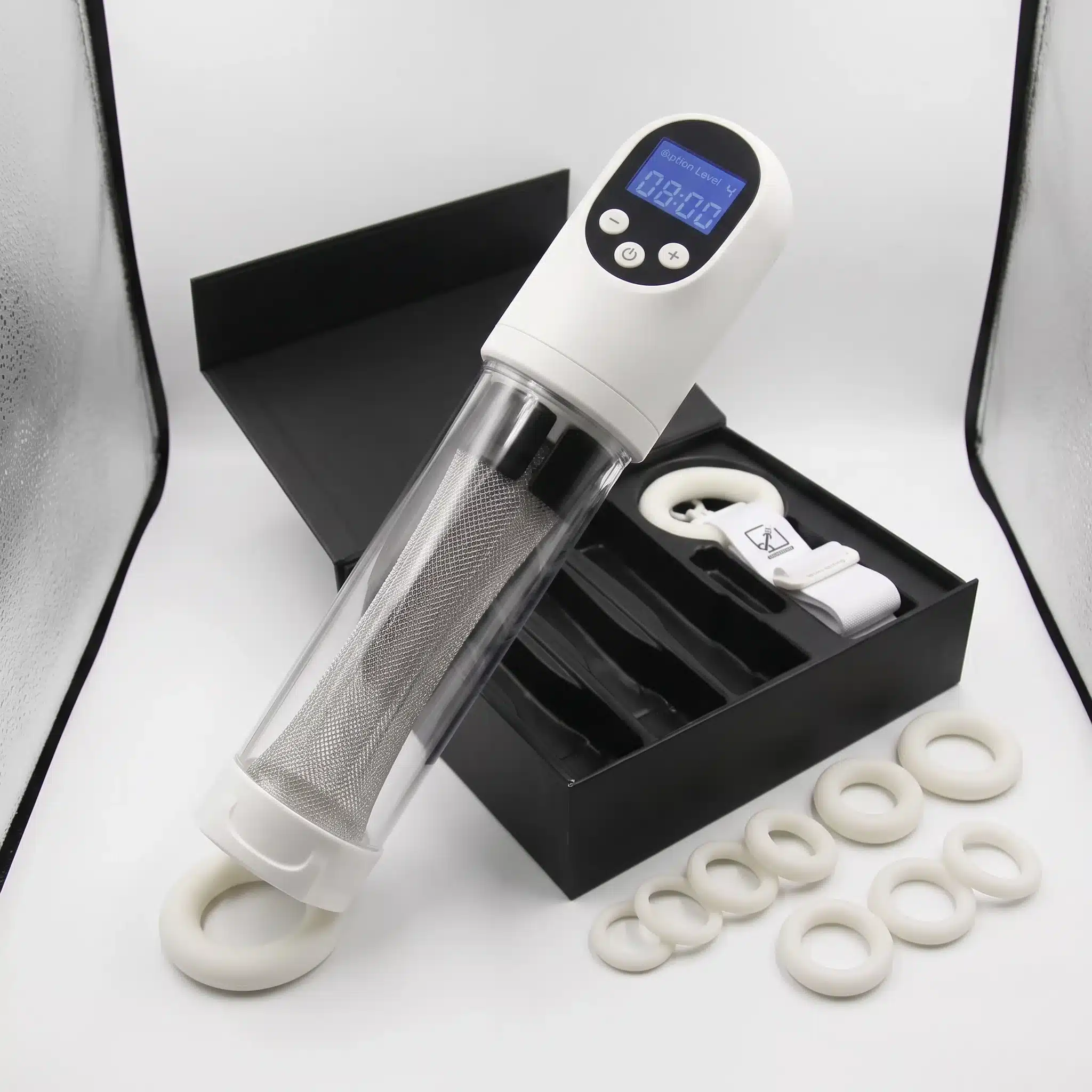
Anyone who deals with the topic of penis size will find information on PeniXtend, for example. Penis size and average penis thickness and to Penile stretchers and mechanical traction.
What is important here is that A penis extender is not a treatment for low libido.
PeniXtend is based on the principle of traction therapy and is aimed at men who want to learn about non-operative approaches to penis extension. The product should therefore not be presented as a drug or a means of directly increasing sexual desire.
There are numerous products on the market that are advertised with terms such as "libido booster", "testosterone booster" or "more sexual energy".
Caution is needed here.
A dietary supplement is not a substitute for medical clarification of a possible disease. Especially if the libido suddenly decreases significantly or further complaints occur, should first be looked for the cause.
Even natural ingredients are not automatically harmless.
Anyone who takes medication or suffers from a medical condition should check whether there are interactions or other risks before taking supplements.
First, the possible cause should be found. Sleep, exercise, stress, diet and a healthy lifestyle can be important foundations. With persistent low libido, hormonal, physical, psychological and drug causes should also be considered.
There is no general fast method. The best measure depends on the cause. For example, stress can help recovery, while medically confirmed testosterone deficiency may qualify for medical treatment.
Yes, in men with a proven testosterone deficiency, testosterone therapy can improve libido. In men with normal testosterone levels, however, such therapy is not recommended as a general treatment for sexual desirelessness.
There is no universal drug for low libido. Medications are used depending on the cause. This may include testosterone therapy if testosterone deficiency is proven. Other causes require other treatments.
No. Medications for erectile dysfunction primarily treat erectile function. They do not automatically increase sexual desire.
Mental stress, anxiety, depression and pressure to perform can affect sexual desire. The EAU explicitly takes psychological and partnership factors into account when determining a low libido.
Libido can change with age. However, a significant or burdensome change should not simply be dismissed as a "normal ageing process". In the case of additional complaints, a medical assessment may be useful.
Persistent lack of sleep can affect energy, mood, and general well-being, thereby also affecting sexual desire. A healthy sleep rhythm is therefore a useful part of a holistic approach.
If the change persists, is heavily strained, occurs suddenly or occurs together with erection problems, fatigue, mood swings or other complaints, a medical examination is useful.
Who are the Increase libido in men would, should not start with a single product or drug, but with the question: Why has sexual desire decreased?
The causes can be very different. Stress, lack of sleep, psychological stress, relationship conflicts, medications, illnesses and hormonal changes come into question.
A healthy lifestyle with sufficient sleep, regular exercise, balanced diet and as few harmful habits as possible creates a good foundation. In the case of persistent complaints, it should also be checked whether there is a medical cause.
Especially when it comes to testosterone, an exact distinction is important. Testosterone therapy can be useful in men with proven hypogonadism and corresponding complaints. However, it is not a general libido booster for men with normal hormone levels.
Also, medications for erection problems are not automatically medications for lack of sexual desire.
And finally, sexual health consists of more than erection and penis size. Physical health, psychological well-being, self-confidence and good communication in the partnership can be just as important.
Those who want to improve their sexual desire should therefore not look for the fastest promise, but for the cause and a suitable, realistic solution.