

The penis grows mainly during puberty. As sexual maturity increases, its size increases, while at the same time testicles, body hair and other physical characteristics develop. When puberty is complete, natural penis growth also usually ends. However, an exact age cannot be set for every man, because puberty starts and runs differently for everyone.
The question "When does the penis stop growing?" Especially preoccupied are adolescents and young adults who compare their physical development with that of others. It is important to distinguish between normal growth during puberty and desired enlargement in adulthood.
In this guide, you will learn when the penis grows, what role hormones and puberty play, why the development is different for everyone and what is still possible after puberty is complete.
Penis growth is closely linked to puberty. In boys, puberty usually begins between about 9 and 14 years. In this phase, the production of sex hormones, especially testosterone, increases significantly. As a result, the genital organs change and the entire body continues to develop.
The onset of penis growth is therefore not the same in all boys. In one, physical development begins earlier, in another later. That alone is not usually a cause for concern.
During puberty, the following changes may occur:
Studies on the development of the male external sex organs show that the strongest growth of the penis and testes occurs especially during the pubertal development phase. A study of more than 6,000 boys, for example, showed a significant growth spurt of the genitals approximately in the period of 12 to 16 years.
However, this does not mean that every boy goes through the same development at this age. The biological age and the respective puberty state are more important than a single year.
There is no specific age limit such as "at 18 years old, penis growth is always over".
The reason is simple: puberty does not end at the same time in every person. If the physical development is not yet completely completed, the development of the genital organs can also continue.
The Cleveland Clinic describes the final stage of puberty as the period in which physical development is completed. In boys, puberty often ends in late teens. However, some physical growth processes can go beyond that.
For penis growth, this means: In most men, the natural development of the penis is largely terminated after completion of puberty.
That is why age alone is not crucial. Much more important is the question of whether puberty is already completed.
This can be individually different.
A man whose puberty started later can also reach full physical maturity later. Therefore, it cannot be said that the penis stops growing exactly on the 18th birthday.
This also applies to general body growth. Most men reach their final height around late teens, with some still growing into early adulthood.
Who is already fully grown and has completed puberty, on the other hand, should not expect that the penis suddenly becomes significantly larger due to normal further body growth.
The most important background is hormonal development.
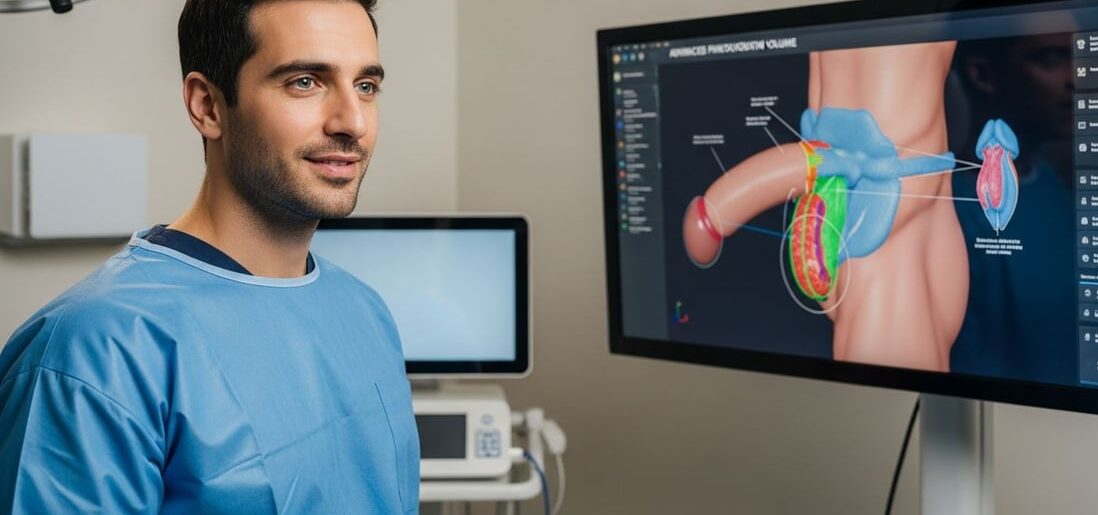
With the onset of puberty, the activity of the testes changes. The production of testosterone increases and supports various physical development processes. This includes the development of the male genital organs.
This is not an isolated process. Penis growth takes place along with other changes.
Therefore, the penis size during puberty can look significantly different at different times. A boy who is at the beginning of puberty may show a significantly different physical development compared to a boy of the same age at the end of puberty.
This is one of the reasons why comparisons among peers are not very meaningful.
No.
Physical development is individual. Genetic factors, timing of puberty and hormonal development play a role. The measurement method can also cause two seemingly different values to be compared, although the actual difference is smaller.
A study of more than 1,500 adolescents showed, for example, that penis size during puberty was more closely related to the respective puberty stage than to chronological age alone.
This is important for assessing your own development.
For example, a 14-year-old may already be in an advanced puberty phase, while another 14-year-old is just beginning. Both developments can be normal.
When puberty is fully completed, another Natural penis growth Usually not expected.
This does not mean that the appearance of the penis can never change in adulthood. Erections, body weight, blood circulation, age and certain diseases can affect how large the penis appears or how it appears in an erect state.
However, this is different from real anatomical growth.
For example, additional fat in the pubic area can mask part of the penile shaft and make the penis appear visually shorter. Changes in blood flow or certain diseases can also affect the perceived or functional length.
Therefore, a distinction should be made between these points:
| Changes | Real penis growth? |
|---|---|
| Pubertal development | Yes |
| Better erection | No |
| Change in body weight | No |
| Change in pubic fat | No |
| Difference Between Flax and Erect | No |
| Ageing-related changes | No |
| Anatomical development during puberty | Yes |
The wording "Grow your penis" It can mean two different things.
In an adolescent, this can mean normal physical growth during puberty. This growth is controlled by normal physical development and cannot be accelerated at will.
In an adult, on the other hand, it is usually about the question of whether the penis size can still be increased after puberty.
Here one should be particularly careful with promises.
There are numerous products, exercises, dietary supplements and devices that promise penis enlargement. However, the scientific data differs significantly between the different methods. A blanket statement such as "Method X allows the penis to grow safely by several centimeters" is therefore not serious.
The Cleveland Clinic also points out that many products and procedures for penis enlargement offer little or no proven improvements and some methods can bring risks.
After puberty is complete, one should not expect spontaneous further growth.
Anyone who wants to change his penis size is therefore in a different situation than a young person whose body is still developing.
In adults, various approaches are discussed, including:
However, these methods are not equivalent.
Especially with products and exercises from the Internet, there are many promises that are not sufficiently proven. Therefore, one should always distinguish between scientifically studied methods, theoretical mechanisms of action and pure marketing statements.
A penis extender is a mechanical device that works on the principle of traction. Controlled pull is exerted on the penis tissue.
Penis traction has been scientifically studied and is also considered in the medical context. However, the existing evidence on the use for penis extension is not so clear that a certain result can be derived for each user.
A current PeniXtend guide therefore also describes that individual results depend on various factors and no certain centimetre numbers can be guaranteed.
For adults dealing with the subject Grow the penis This difference is important: An extender is not a means of prolonging natural puberty. It is a mechanical approach that must be distinguished from normal physical development.
During traction, a controlled tensile force is exerted on the tissue over a longer period of time.
The basic principle is not the same as for a short-term erection or a vacuum pump. Rather, it is a question of mechanical loading of the tissue over a longer period of time.
How much a tissue adapts to such a load can depend on various factors. Therefore, statements about possible results should not be transferred to every man.
Anyone who uses a penis stretcher should also adhere to the respective manufacturer's instructions and interrupt the application in case of pain, numbness or noticeable skin changes.
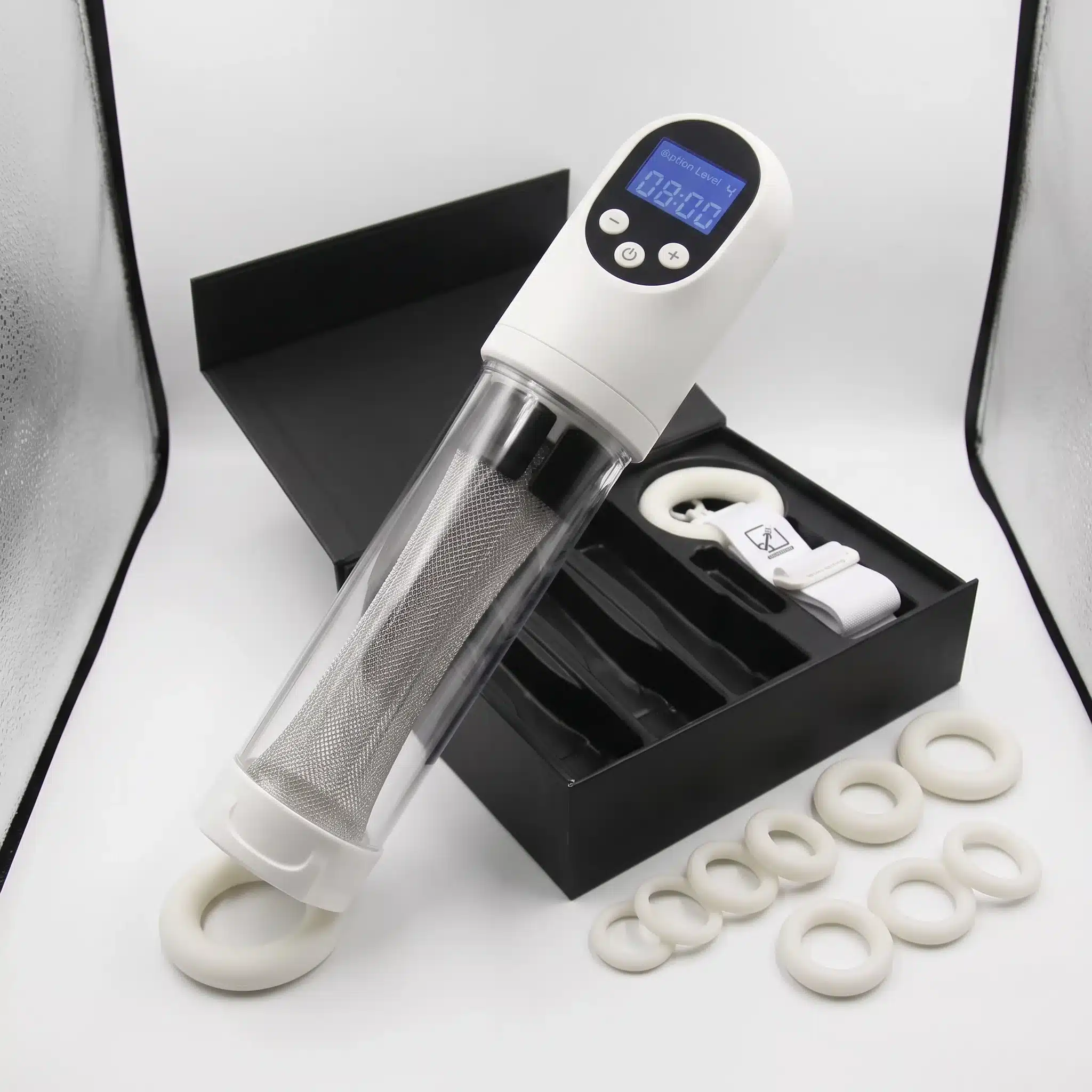
A penis pump works on a different principle than an extender.
Due to negative pressure, blood is passed into the penis, which can result in an erection or a temporary enlargement. This is not automatically equivalent to permanent anatomical growth.
Therefore, one should not confuse a short-term effect after application with real penis growth.
Anyone comparing different methods should therefore always ask:
These questions make much more sense than simply seeking a method that makes as much promise as possible.
Numerous exercises are advertised on the Internet, which are supposed to cause a permanent enlargement.
Jelqing, for example, is particularly known. For such methods, however, there is no solid basis from which a safe and reliable permanent penis enlargement can be derived for every user.
The problem with intense or improper stretching and pressure exercises is also that injuries can occur.
Pain, bruising, swelling, numbness or other changes should therefore not be interpreted as a sign that a method "works". Rather, they may indicate an injury.
A balanced diet and regular exercise are important for overall health. They can support physical fitness and cardiovascular health.
However, in an adult man, they do not ensure that the penis continues to grow anatomically suddenly after puberty has ended.
Food supplements should also not be equated with a natural growth agent.
So a healthy lifestyle can make sense for overall sexual health, but it is not a method to prolong normal puberty or make the penis grow arbitrarily in an adult.
The visible size can change without the penis actually growing or shrinking.
For a flaccid penis, temperature, stress and the current blood flow play a role, among other things. Therefore, the limp length is not a particularly reliable measure of the final penis size.
Even in the erect state, the measurement can be different if a different location is used each time.
Body weight can also play a role. With greater excess weight, fat in the area above the penis can mask part of the shaft. This allows the penis to appear optically shorter, although its actual anatomical length has not changed accordingly.
Who wants to know whether your own penis is actually larger or smaller, should first measure correctly.
A ruler is usually used for the length. It is important to always proceed under the same conditions when repeated measurements are made.
Attempts should not be made to achieve values which are as large as possible by means of different measurement angles. What is crucial is a consistent approach.
If you want to classify your own size better, you will already find a detailed guide on the topic at PeniXtend Measure the penis correctly.
Also, the question of average penis size should be considered separately from the topic of growth. An adult man does not have to be exactly the average to have a normal penis size.
A single size, which is considered "normal" for all men, does not exist.
Penises differ in length, girth, shape and appearance. In addition, the size can vary considerably in the limp state without it being possible to automatically draw conclusions about the erect size.
Comparison with images from pornography or social media also makes little sense. Such representations do not represent the normal range of physical differences.
Anyone who deals with his penis size should therefore first measure correctly and classify his own value realistically.
Further information can be found in the PeniXtend guide for Average penis size.
Not every boy develops at the same pace.
If puberty begins later, the development of the genital organs can also take place later. Delayed puberty is not automatically an indication of disease.
However, if no signs of puberty appear until an unusually late age or the development is significantly different than expected, this should be clarified by a doctor.
This is especially important because hormonal or other medical causes may be behind a noticeable development.
An independent intake of testosterone or other hormones, on the other hand, is not a sensible solution. Hormone therapy belongs in medical hands and is only useful with appropriate medical diagnosis.
A micropenis is not a simple synonym for "small penis".
The medical term describes a penis size well below the age-related norm range, which is assessed on the basis of standardized measurements. The diagnosis is made especially in children and adolescents according to medical criteria.
In certain cases, hormonal causes can play a role. Treatment then depends on the particular cause and age.
This also shows why blanket statements about penis growth are problematic. A medically diagnosed micropenis is different from the subjective perception that one’s own penis is "too small".
Yes, penile development can still progress significantly during puberty.
Studies on male genital development show that the strongest development of penis size is associated with pubertal maturation. Even in boys with initially very small penis size, a significant increase in size can still occur during puberty.
This means that a small penis before or during puberty is not automatically an indication that the final size has already been reached.
However, in case of conspicuous deviations, the assessment should be made by a doctor and not on the basis of Internet comparisons.
For a healthy adolescent, there is no serious method by which you can accelerate normal penis growth at will.
Puberty is a biological development process. Hormones and genetic factors determine when and how the body changes.
Products, pills or exercises that promise rapid enlargement within a few days or weeks should therefore be viewed critically.
You should be especially careful about statements like:
Such promises say more about advertising than actual scientific evidence.
The two terms are often mixed together.
penis growth denotes the natural development of the penis during childhood and especially during puberty.
Penis extension In contrast, it refers to the attempt to change the penis size after normal physical development.
This distinction is important because the underlying processes are completely different.
A 15-year-old whose puberty is not yet complete is in the midst of a natural development process.
An adult man who is interested in a penis stretcher, on the other hand, deals with a method of mechanically influencing the tissue.
The two should not be equated.
Anyone who is an adult and wants to change his penis size should first develop realistic expectations.
A method should not be judged by the size of the advertising promise, but by the scientific data available and the risks involved.
There are scientific studies on mechanical traction, but the evidence varies depending on the application and device. Therefore, study results cannot be automatically transferred to every product and every user.
PeniXtend is based on the principle of traction and is designed for non-operative use. Anyone interested in this should first of all deal with the functioning, the correct application and the limitations of this method.
More information can be found on the page for Functioning of traction and in the detailed guide Penis extenders.
Not every uncertainty about penis size requires a medical examination.
However, a medical examination may be useful if:
In adolescents, the development should always be considered in the context of the entire puberty course.
In adults, on the other hand, it is more about excluding complaints, diseases or functional problems.
The penis grows mainly during puberty. When the development is completely completed is individually different. After puberty is complete, no further natural penis growth is usually expected.
Not necessarily on the 18th birthday. The end of penis growth depends more on the completion of puberty than on a particular birthday.
If physical development is not yet fully completed, changes can still take place in some young men. After fully completed puberty, however, a clear natural penis growth is not to be expected.
Natural growth as during puberty is not expected after its conclusion. For adults, there are several approaches to penis enlargement, including mechanical traction. The scientific evidence and the possible risks must be considered individually.
Testosterone plays an important role in the development of the penis during normal male puberty. However, taking testosterone independently is not a suitable method for penis enlargement. Hormone treatment should be carried out only under medical indication and under medical supervision.
Exercise supports overall health, but does not cause the penis to continue growing after puberty in an adult male.
Yes. Additional fat in the pubic area can cover up part of the penile shaft, thereby reducing the visible length. This does not necessarily mean that the penis has become anatomically smaller.
No. Penis size varies from man to man. A subjective impression of "too small" is not the same as a medical diagnosis.
The most important answer is: The penis grows mainly during puberty and usually reaches its adult size with the completion of physical development.
A certain age cannot be set for every man. For some, puberty begins earlier, for others later. Therefore, the individual level of development is more important than a rigid age limit.
After puberty is complete, one should not expect further natural growth. Anyone who wants to change their penis size as an adult should distinguish between scientifically studied methods, short-term effects and unproven promise.
Especially with a sensitive topic such as penis size, realistic expectations are crucial. Fast solutions and guaranteed centimeter numbers are not a reliable benchmark for a serious method.
Those who are interested in non-operative possibilities can then discuss the different approaches of penis enlargement without surgery inform. For the field of mechanical traction, the guide offers Penis extenders A suitable next step.
PeniXtend pursues a non-operative approach based on traction. Here, too, the following applies: The application should be based on the manufacturer's specifications, and individual results can be different.