One Perfect penis size There is no medical. On the contrary, studies show a large natural range. In adult men, the average length in the erect state is about 13,1 cmWhile the average circumference is around 11,7 cm amounts. Decisive is therefore not a certain number, but the individual anatomy and function.
Many men still wonder: How big should a penis be? How big is an average penis? And when is it considered too small or particularly large? A look at scientific data helps to classify these questions more realistically.

No. A medically determined ideal or perfect penis size does not exist.
The term "perfect" describes a personal idea rather than a medical reading. Body differs from person to person – and this also applies to penis size.
A large systematic review by Veale and colleagues evaluated measurements of up to 15.521 men. The researchers determined under standardized conditions, among other things, an average erect penis length of 13,12 cm.
However, this does not mean that exactly this length must be aimed for. An average is merely a statistical average.
Who wants to know, How big a penis should be, does not find a single target in medical studies.
It makes much more sense to distinguish between average and individual normality.
A penis can be slightly shorter or longer than average and still function completely normally. The shape, extent and change between the limp and erect state also differ significantly.
The frequently mentioned idea that a certain measure is automatically "too small" or "perfect" is therefore misleading.
| Measurement | Average |
|---|---|
| Slack length | approx. 9,2 cm |
| Extended length | Approximately 13.2 cm |
| Erected length | about 13.1 cm |
| Slackness | ca. 9,3 cm |
| Erect circumference | approx. 11,7 cm |
These values are derived from the systematic review work of Veale et al. The study included measurements by medical professionals and standardised measurement methods.
The question of the Average penis can be answered relatively clearly if a distinction is made between the different measurement states.
In the limp state, the mean value in the said investigation was approximately 9,16 cm. In the erect state it was average 13,12 cm. The average erect circumference was approximately 11,66 cm.
The measurement method is important here. Flaccid penis lengths can vary more strongly, for example, due to temperature, stress or other physical factors. Therefore, the limp size can only be compared with other men to a limited extent.
The study also indicates that there were differences between the studies in the different measurements.
An average is not a limit.
For example, if an examination gives an average of 13.1 cm, it does not mean that men with 11 or 15 cm are outside a normal range.
Statistical values describe a distribution. Within this distribution, there are many different body sizes.
Therefore, the sentence "I’m not exactly on average, so something is wrong" is wrong.
Especially when it comes to penis size, the comparison with individual numbers can create unnecessary pressure.
The size of a penis can change significantly between the flaccid and the erect state.
In the systematic review, the average limp length was 9.16 cm and the average erect length was 13.12 cm.
This already shows why the flaccid size says little about how long the penis is in an erection.
Some men notice a relatively short length in the flaccid state and are therefore unsettled. However, the erect variable cannot be automatically inferred from this.
Those who want to compare their own size with scientific averages should measure as uniformly as possible.
For the erect length, the penis is measured at the top from the pubic bone to the tip of the glans. A ruler is better suited for this than a flexible tape measure.
The same measurement method should always be used. Anyone who measures several times can also see whether the results differ greatly from one another.
A single measurement is not always meaningful.
More about the correct measurement can be found in our guide to Measure penis length.
No.
Penis size alone does not determine how satisfactory sexuality is experienced. Intimacy, communication, sexual technique, arousal and mutual well-being also play an important role.
Even an above-average penis is not automatically more advantageous. For some people, a very large penis length or girth can even be unpleasant.
Therefore, "bigger" is not an objective definition of "better".
The question "How big is the biggest penis?" often leads to spectacular information on the Internet. However, caution is needed in such record reports.
Not every published figure was measured under medically standardized conditions or independently confirmed. Therefore, one should distinguish between scientifically documented measurements and media reports.
In addition, extreme individual values have hardly any significance for the normal penis size.
For comparison: The scientifically determined average of the erect length is around 13.1 cm.
An extraordinary record therefore says nothing about which penis size is normal or meaningful for the general population.
Further information on this topic can be found in the article Largest penis in the world.
In addition to the length, Penis circumference Another important measured value.
The systematic review work of Veale et al. determined an average extent of approximately 11.66 cm in the erect state and approximately 9.31 cm in a limp state.
Here too, the following applies: The average is not an ideal value.
A man with a slightly smaller or larger circumference is not automatically outside of a normal physical spectrum.
Who wants to classify its scope more precisely, can additionally deal with the topic Penis circumference employ.
This question should be considered separately from the question of the perfect penis size.
This also includes: Non-operative methods for penis enlargement, which differ significantly in terms of mode of action, evidence and potential risks. These include, inter alia:
Scientific evidence varies by method. Therefore, advertising claims should not be equated with medically proven results.
Especially for devices or exercises, correct application, realistic expectations and consideration of possible risks are important.
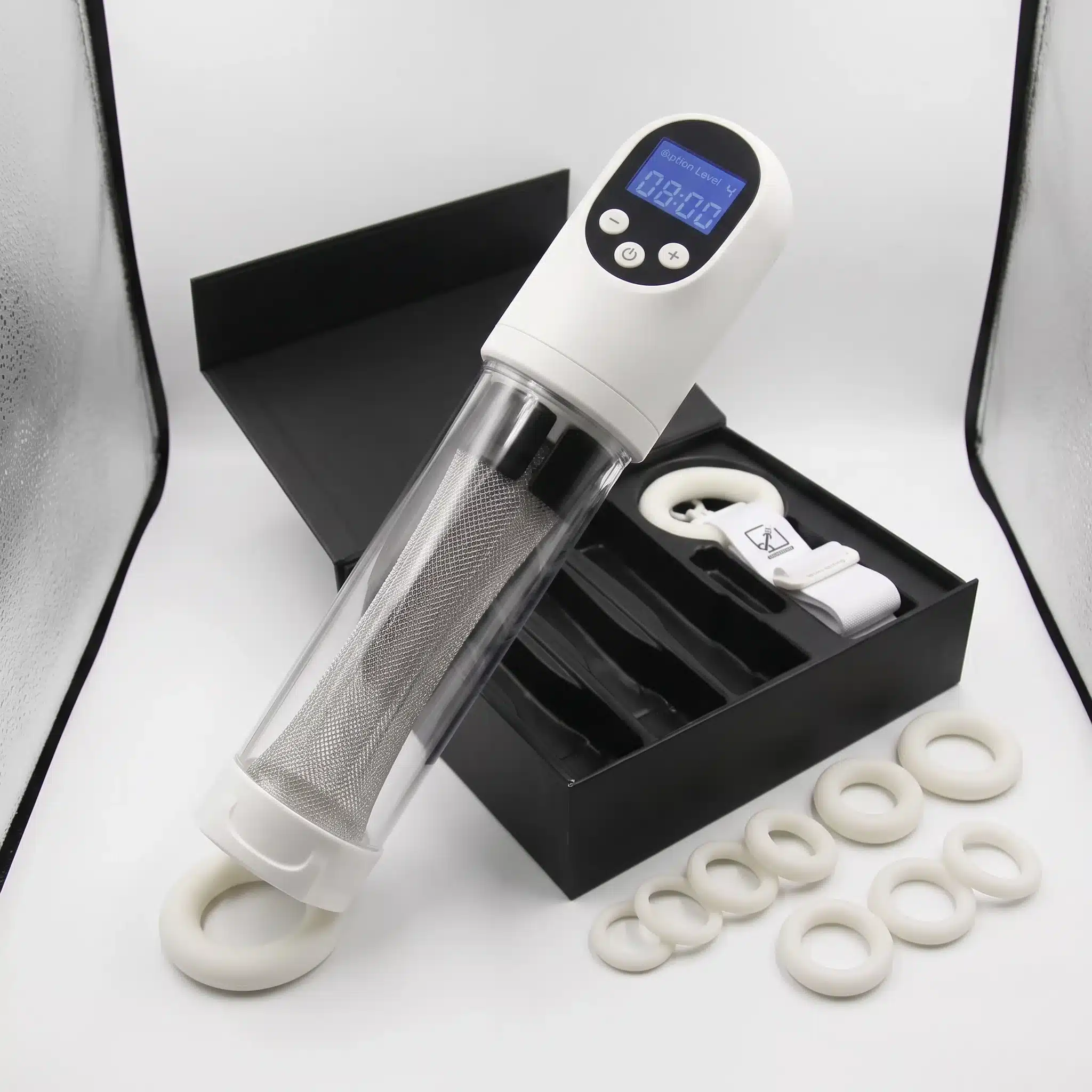
A penis extender works with mechanical traction. The basic principle is called traction.
Traction methods are also studied in medical research. However, the existing evidence should be considered differentiated and does not justify blanket promises about certain results.
Anyone interested in this method should therefore first understand how a penis stretcher works, how it is used and what limits exist.
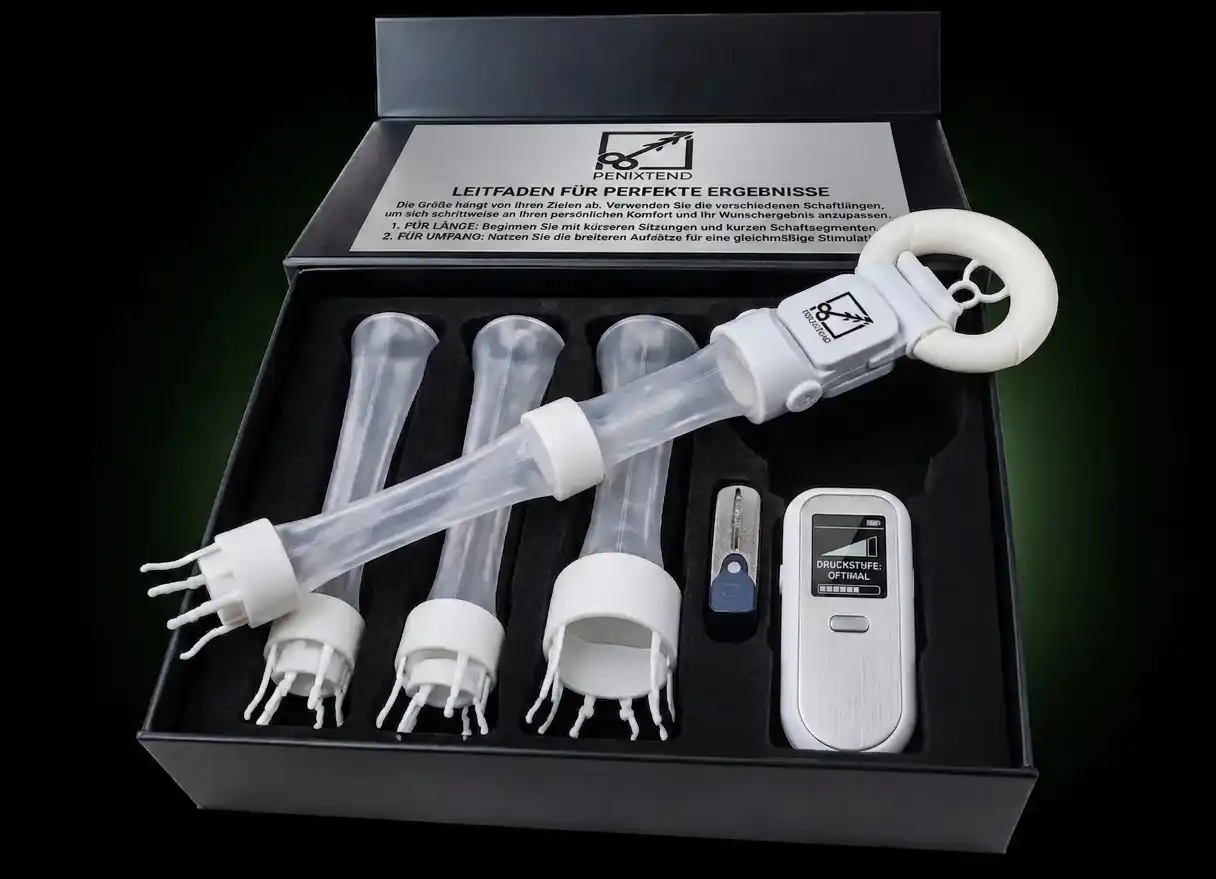
PeniXtend is based on the principle of traction and is designed for non-operative use at home. Which application and which model are suitable should always be based on the official product information and the user manual.
You can find more on the subject under Penis extenders.
A single number that is considered "normal" for all men does not exist.
The scientific averages can only help to statistically classify your own variable. They are not a medical test nor an evaluation of one’s own body.
If there are no complaints or functional problems, a deviation from the average should not automatically be considered a health problem.
Pure penis size is usually not a reason for medical treatment.
However, a medical examination can be useful if additional complaints occur, for example:
Even if the concern about the own penis size becomes very strong and burdens the self-esteem or everyday life, a conversation with a medical professional can be helpful.
There is no medically defined perfect penis size. The average is about 13.1 cm of erect length, but individual deviations are normal.
There is no prescribed size. Average values can serve as orientation, but should not be understood as a personal target value.
According to a large systematic review, the average erect length is about 13.12 cm. In the limp state, the mean value is about 9.16 cm.
The answer depends on whether the measurement is limp or erect. A single number without specifying the measurement state cannot therefore be meaningfully evaluated.
15 cm erect are above the average of 13.12 cm determined in the said study. However, this does not mean that 15 cm is "better" or the ideal size.
In the case of alleged record values, a distinction should be made between independently confirmed measurements and media data. Extreme individual values are not representative of normal penis size.
This depends on the method used. For non-operative procedures, the study situation is different. Statements about guaranteed or fast permanent magnifications are not serious.
The most important answer is: There is no perfect penis size.
Scientific research shows an average erect penis of about 13,1 cm long and 11,7 cm in circumference. These values are reference points and not specifications.
Who asks himself How big a penis should beTherefore, should not look for a single ideal number. Crucial are individual anatomy, function and personal well-being.
If you are still concerned with possibilities for non-operative penis extension, you should compare methods based on their effectiveness, safety, evidence and realistic limits – instead of focusing on extreme record values or advertising promises.